The problem: siloed tools, fragmented data
Every business application — project management, budgeting, CRM, requirements tracking — keeps its own copy of the truth. Inside a single tool, everything stays consistent: update a task estimate and the project total rolls up automatically.
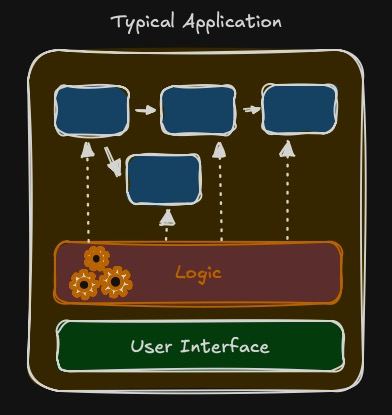
But real work doesn’t live inside a single tool. A task connects to a requirement, which connects to an objective, which connects to a budget — and these usually live in different systems.
The result is predictable:
- Manual re-keying — teams copy data between tools, introducing errors and delay
- Stale information — by the time a report is assembled from three systems, the data has already moved on
- Expensive integrations — custom sync jobs that are fragile and costly to maintain
- Slower decisions — leaders piece together a picture from inconsistent sources instead of seeing one connected view
The more connected your business needs to be, the more these silos cost you.
A different model: connected nodes
Nodlin rethinks this from the ground up. Instead of locking data inside application boundaries, Nodlin organises everything around nodes — the core data elements your business manages (tasks, objectives, budgets, risks, and more).
Nodes connect to other nodes, and Nodlin keeps those connections up to date. Change a task estimate and every connected project, budget and dashboard updates in turn — even when those elements are managed by different teams or different systems.
This isn’t instantaneous the way a single database transaction is. Instead, updates flow through the graph and converge — fast enough that it feels seamless, flexible enough to span your entire operation.
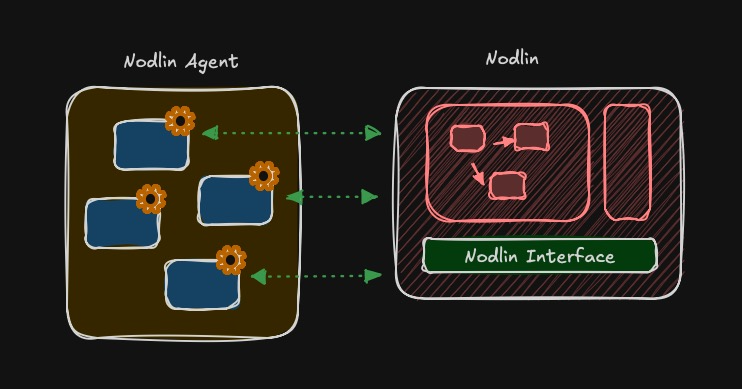
In Nodlin, the agent replaces the traditional application. Each agent manages a focused set of node types — but it can connect to any other agent’s nodes. There are no application boundaries, just a connected graph of business knowledge.